.png)

_edited.png)
Planning Permission vs. Permitted Development: The Stress-Free Guide for London & Surrey
- Mar 1
- 5 min read
Navigating the labyrinth of UK planning laws is often the biggest hurdle between a homeowner and their dream extension. The terminology alone is enough to induce a headache before a single brick is laid. This guide clarifies the distinct paths of Planning Permission and Permitted Development to streamline your journey.
Whether it is a sleek kitchen extension in Croydon or a loft conversion in Bexleyheath, understanding these rules saves time, money, and sanity. Let's explore the fundamental differences that dictate how you can transform your property in 2026.
The "Golden Ticket": What is Permitted Development?
Permitted Development (PD) is effectively a pre-approved grant of planning permission from the government. It allows homeowners to perform certain types of work without needing to submit a full planning application to the local council.
This system exists to simplify minor improvements and reduce the burden on local planning authorities. For many, it is the fastest route to increasing square footage. However, the "permitted" part comes with a very specific set of strings attached.
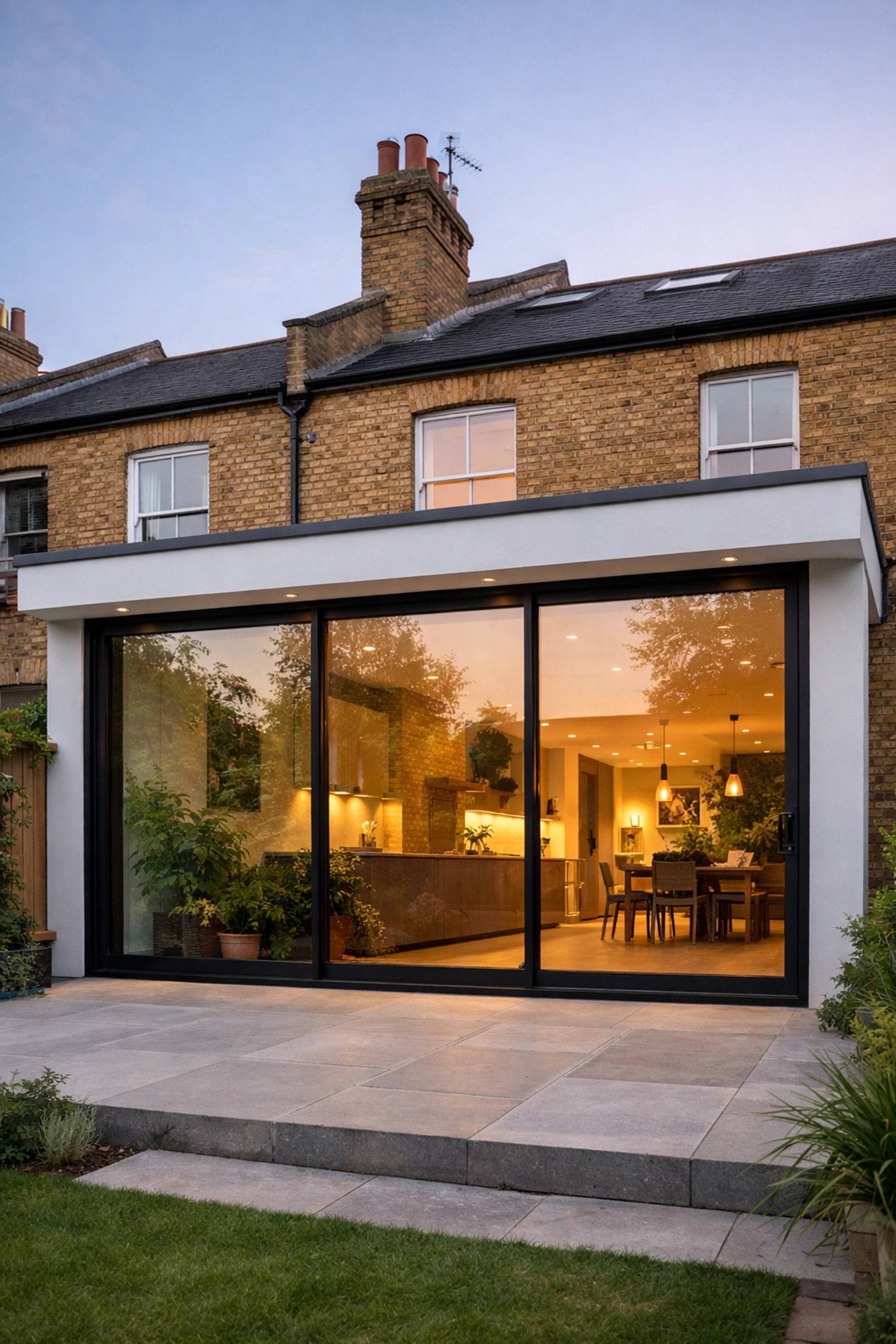
In London and Surrey, PD rights typically cover single-storey rear extensions, porch installations, and certain loft conversions. These rights are subject to strict criteria regarding height, materials, and proximity to property boundaries. For instance, a detached house might allow for a 4-meter rear extension, whereas a terraced house is capped at 3 meters under standard rules.
The Traditional Route: Full Planning Permission
Planning Permission is the formal process of seeking consent from your local authority for proposed building work. This is the necessary path when your design exceeds the limitations of Permitted Development.
When you submit a full application, the council assesses your proposal against local planning policies, design guidelines, and the impact on your neighbors. It is a discretionary process, meaning the council has the power to say "yes," "no," or "only if you change the roof pitch."
While it takes longer: usually eight weeks for a decision: it offers significantly more design flexibility. If you have a unique vision that pushes the boundaries of standard "box" extensions, this is your route. If you are unsure about the costs involved in this stage, you can find no-more-guesswork with our planning fee calculator.
The Middle Ground: Prior Approval
The planning world rarely functions in black and white, and the "Prior Approval" process is the gray area in between. This is often used for larger home extensions that technically fall under Permitted Development but require a "neighbor consultation scheme."
Under this route, the council notifies your immediate neighbors of your plans. If no one objects, you are generally good to go. If an objection is raised, the council then reviews the impact on the "amenity" of the neighboring properties. It is a faster, lighter version of full planning but carries a bit more risk than standard PD.
Local Context: From Bexleyheath to Croydon
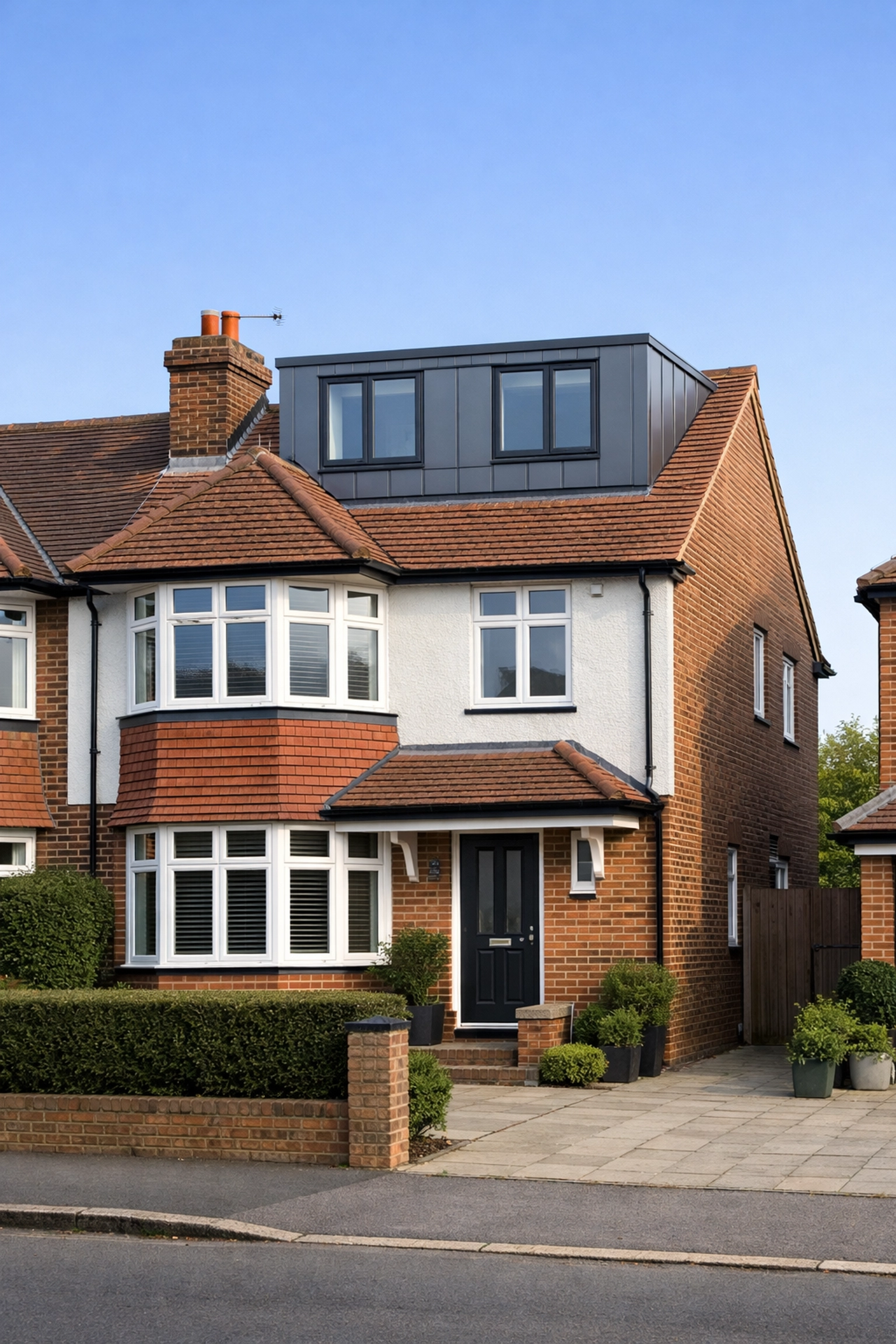
The rules shift depending on your specific postcode and property type. If you are looking for an architect in Bexleyheath, you likely know that the borough has a mix of Victorian terraces and 1930s semi-detached homes, each with unique constraints.
Similarly, architects in Croydon must navigate a landscape of rapid urban development and strict conservation areas. It is crucial to remember that Permitted Development rights do not apply to flats, maisonettes, or converted houses. If you live in a beautiful Victorian conversion, you will almost certainly need full planning permission for any external changes.
Furthermore, "Article 4 Directions" can be issued by councils to strip away PD rights in specific neighborhoods to preserve their character. This is common in conservation areas throughout Surrey and London. Before you get too excited about a "no-permits-needed" shed, checking the local constraints is a vital first step. Our planning predictor can provide clarity on your specific situation in just a few minutes.
Why Design Matters Early On
Choosing the right path isn't just about bureaucracy; it’s about the final result. A design forced to fit into PD criteria might feel cramped or disconnected from the rest of the house. Conversely, an over-ambitious planning application can lead to months of rejection and redesign.
Whether you are opting for a modern or traditional architectural style, the initial drawings must reflect the reality of the planning environment. A skilled architect balances your aesthetic desires with the legal limitations of your land.
The Shorplans Advantage: In-House Coordination
One of the biggest stressors in any build is the "he-said, she-said" between architects and structural engineers. At Shorplans Developments, we solve this by providing in-house coordination for both architectural and structural services.
When the person designing your glass-box extension is sitting next to the person calculating the steel beams required to hold it up, the process becomes seamless. This integrated approach ensures that the plans submitted for planning permission are actually buildable and cost-effective.
This level of coordination is especially vital for complex projects like loft conversions in London, where every millimeter counts. We handle the technical heavy lifting so you can focus on the fun parts: like picking out the kitchen tiles.
Essential Paperwork: The Lawful Development Certificate
Even if your project falls squarely under Permitted Development, we always recommend obtaining a Lawful Development Certificate (LDC). This is a legal document issued by the council confirming that your build was legal at the time it was constructed.
Why bother? Because when you come to sell your house in five or ten years, the buyer’s solicitor will demand proof that your extension didn't require planning permission. Without an LDC, you could face delays or be forced to apply for retrospective permission, which is a gamble you don't want to take. It is the ultimate peace-of-mind document for any homeowner.
Beyond Planning: Building Regs and Party Walls
Securing planning approval is a massive win, but it is not the finish line. You still need to comply with Building Regulations to ensure the structure is safe, energy-efficient, and accessible. This is a separate process from planning and focuses on the technical "how" rather than the aesthetic "what."
Additionally, if you are building near a boundary, you will need to navigate party wall regulations. This involves notifying your neighbors and, in some cases, hiring a surveyor. Ignoring this can lead to legal injunctions that stop your build mid-way.
Building Your Future
The path to an improved home in London or Surrey is paved with regulations, but it doesn't have to be a nightmare. By understanding the difference between Permitted Development and Planning Permission, you can set realistic expectations for your timeline and budget.
Whether you are looking for an architect in Bexleyheath to design a side-return or need architects in Croydon for a major renovation, the key is professional guidance. Expertise is not just about drawing pretty pictures; it is about navigating the intricate system of local governance to deliver a successful project.
At Shorplans Developments, we’ve spent years refining our architecture and structural engineering framework. We understand the nuances of local councils and the technical demands of London’s unique housing stock.
If you're ready to stop guessing and start building, we’re here to map out the road ahead. Your dream home is closer than you think, provided you have the right plan in hand.

