.png)

_edited.png)
Is Your Loft Conversion Legal? The Building Regs Checklist London Homeowners Always Forget
- Feb 19
- 6 min read
Most London homeowners think their loft conversion is legal because they didn't need planning permission. They're wrong.
Building Regulations approval is legally mandatory for every loft conversion in the UK, regardless of planning status. This isn't a technicality: it's the difference between a legal habitable room and an expensive liability that can derail your house sale, trigger enforcement action, or create serious safety risks.
The confusion comes from conflating two entirely separate approval processes. Let's clear this up once and for all.
Planning Permission vs. Building Regulations: They're Not the Same Thing
Planning permission governs what your property looks like from the outside. It considers impact on neighbours, street scenes, and local character. Many loft conversions in London qualify as "Permitted Development": meaning they don't require full planning permission if they meet specific size and design criteria.
Building Regulations are different entirely. They ensure your conversion is structurally sound, fire-safe, thermally efficient, and compliant with safety standards. Every loft conversion must pass Building Control inspection, even if planning permission wasn't required.
Think of it this way: planning permission asks if you can build it. Building Regulations confirm how you build it safely and legally.
This distinction trips up thousands of homeowners annually. The assumption that Permitted Development status eliminates all regulatory requirements is the single most expensive mistake in residential construction.
What Building Control Actually Checks
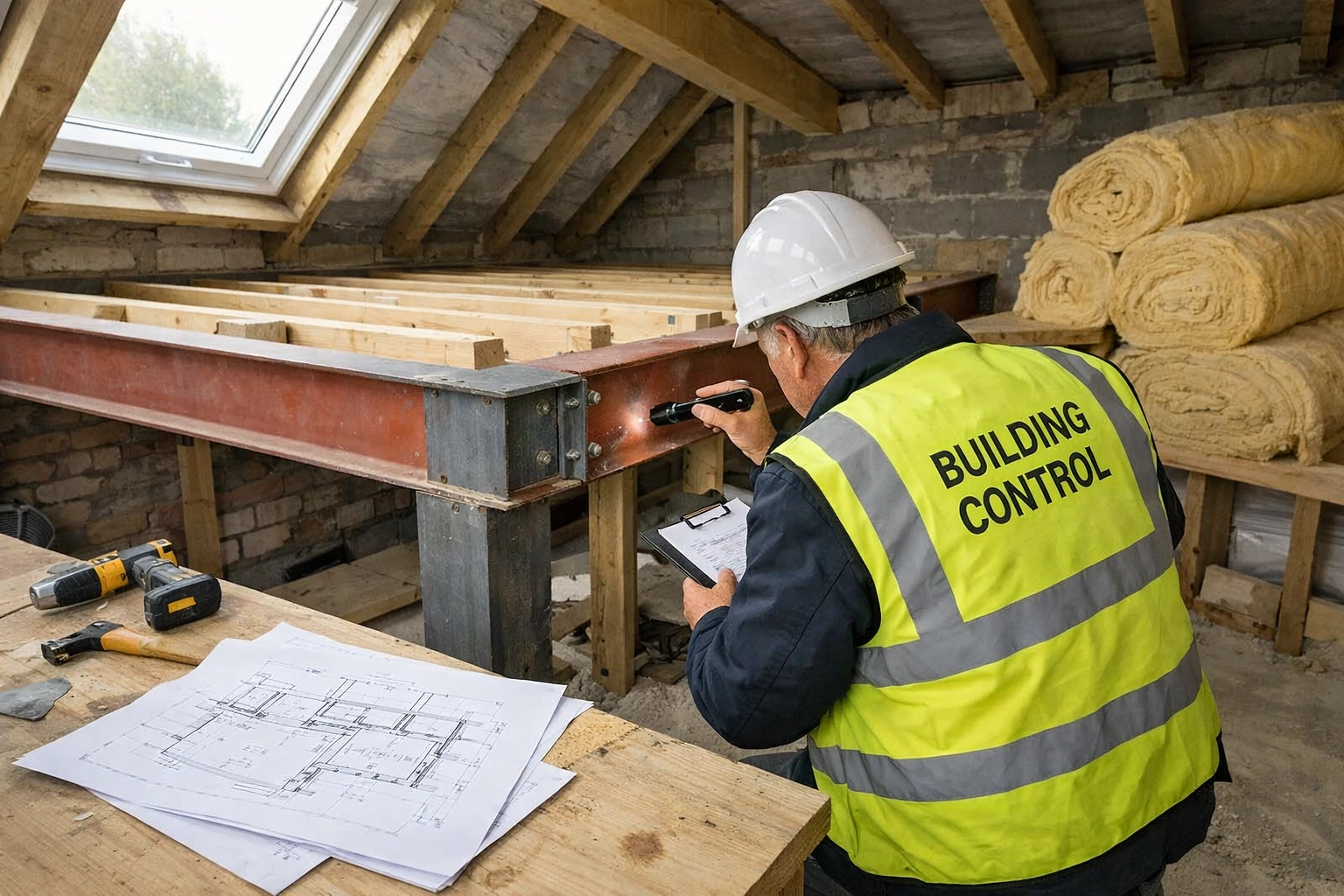
Building Control officers inspect your loft conversion at multiple stages during construction. They're not looking at aesthetics: they're verifying structural integrity, fire safety, insulation performance, and staircase compliance.
Here's what gets scrutinized:
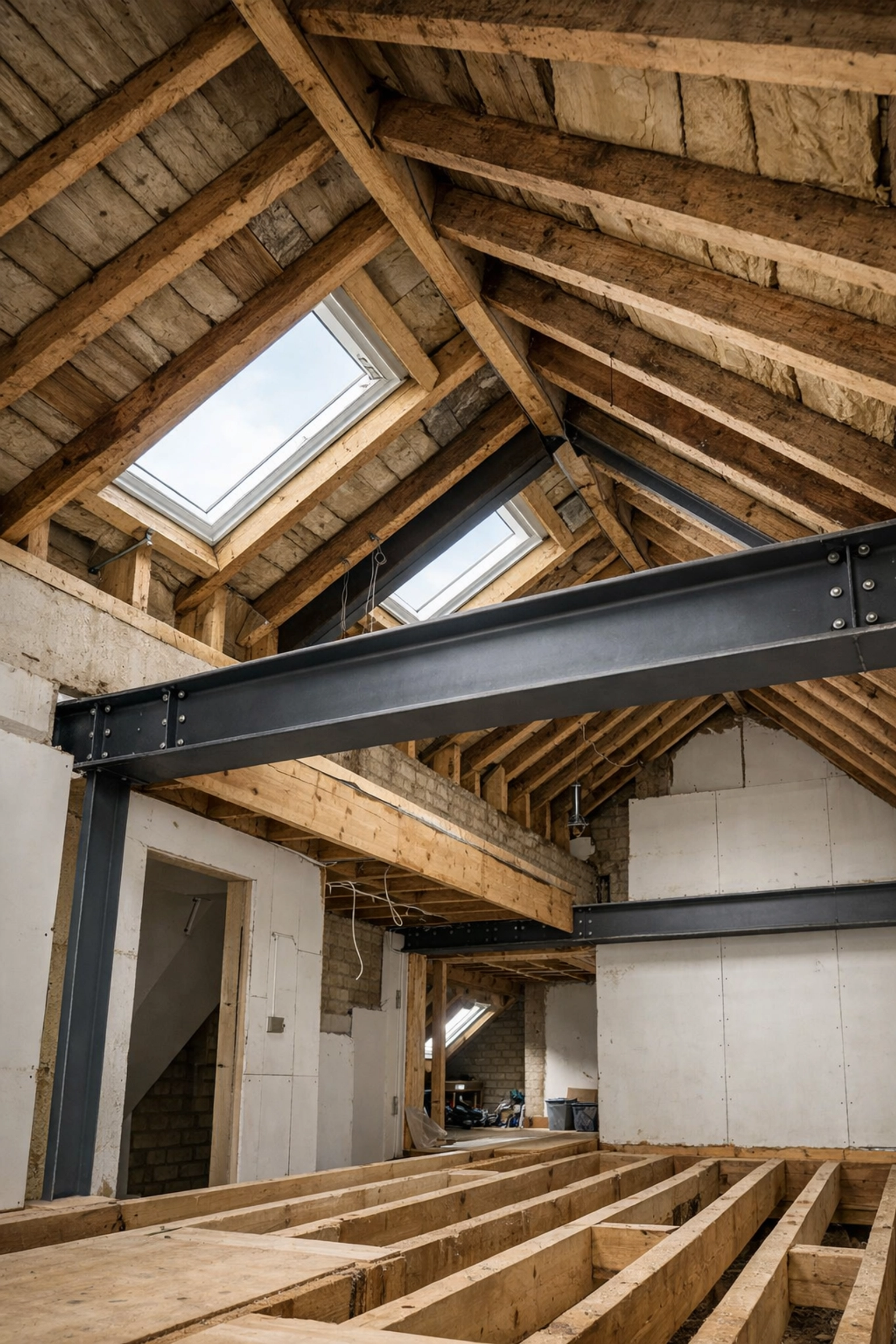
Structural Calculations: Your existing roof structure wasn't designed to support a habitable room. Structural engineers must calculate load-bearing requirements, specify steel beams (RSJs), and ensure floor joists can handle furniture, occupants, and storage. Without certified calculations and properly installed steelwork, your conversion is both illegal and dangerous.
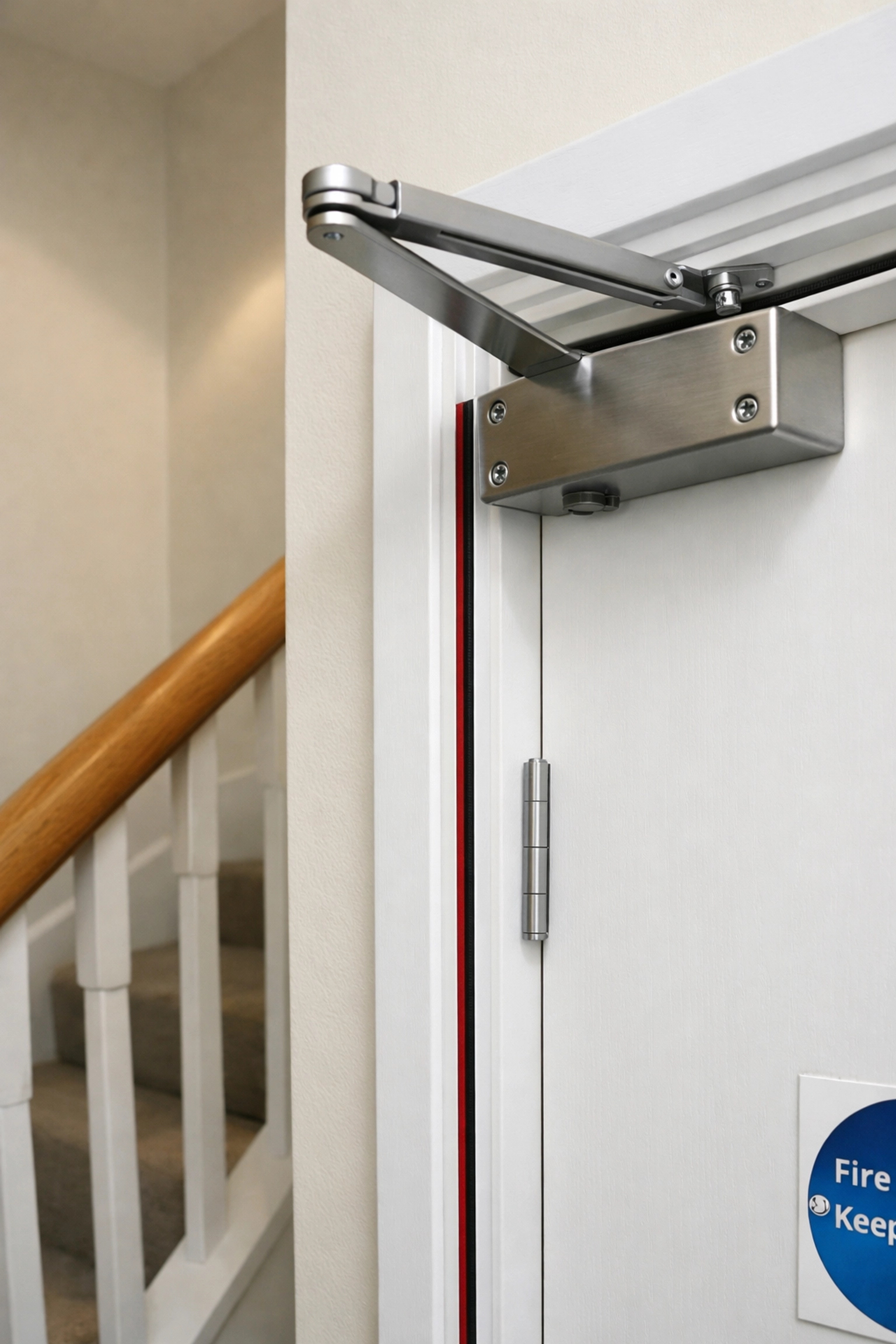
Fire Safety: Loft conversions create additional fire escape challenges. You'll need a protected staircase with fire-resistant construction, compliant fire doors throughout the escape route, and interconnected smoke alarms. In many London properties, achieving compliance requires reconfiguring existing floor layouts: something homeowners discover too late.
Thermal Insulation: Current regulations demand high thermal performance. Your loft must meet U-value requirements for roofs, typically achieved through 270mm+ insulation. Underperforming insulation fails inspection and creates condensation problems that destroy timber structures within years.
Staircase Design: Your new staircase must meet precise specifications for pitch, headroom, handrail height, and tread dimensions. Many beautiful staircases fail inspection because they don't comply with Part K regulations.
The Forgotten Checklist That Causes Legal Headaches
Beyond the obvious technical requirements, London homeowners consistently overlook these compliance essentials:
Property Type Verification
Flats and maisonettes have zero Permitted Development rights for loft conversions. Full planning permission is mandatory before any work begins. Listed buildings require separate Listed Building Consent, regardless of other permissions.
Check your borough's Article 4 Directions: local authorities can suspend Permitted Development rights in conservation areas and designated zones. What qualified for PD in Wandsworth might require full planning in Camden.
Documentation Before You Start
Submit detailed structural drawings, floor plans, and specifications to Building Control before breaking ground. Starting work without approval is illegal and creates complications if structural issues emerge mid-project. Building Control officers schedule inspections at foundation stage, first-floor construction, drainage installation, and final completion.
The completion certificate you receive at project end isn't ceremonial paperwork. It's legal proof your conversion meets safety standards. Without it, mortgage lenders won't value the space as habitable accommodation, and solicitors flag it during property sales.
The Structural Engineer Reality
Structural calculations aren't optional extras: they're legal requirements and safety fundamentals. A qualified structural engineer must design steelwork specifications, beam sizes, and load-bearing solutions specific to your property's age, construction type, and condition.
The structural engineer loft conversion cost in London typically ranges from £800–£1,500 for standard dormer conversions, rising to £2,000+ for complex mansard or hip-to-gable projects. This investment ensures your conversion won't collapse, fail inspection, or create insurance voids.
Many homeowners try reducing the overall loft conversion cost London by skipping proper structural engineering. This is spectacularly counterproductive. Retrofitting correct steelwork after Building Control rejection costs multiples of the original fee, delays projects by months, and sometimes renders partially completed conversions unusable.
Missing Certificates for Older Conversions
If your property already has a loft conversion completed after the mid-1990s, verify the Building Regulations completion certificate exists. Without it, the space cannot legally be marketed as habitable accommodation. Surveyors flag this immediately during property transactions.
If the certificate is genuinely lost, you can apply for retrospective regularization through your local authority: but only if the conversion actually meets current standards. If it doesn't, you face enforcement notices requiring remedial work or even reverting the space to storage.
Why Fire Safety Requirements Are Stricter Than You Think
London's Building Control officers apply particularly rigorous fire safety standards in loft conversions. The height and configuration of multi-story homes create evacuation challenges that didn't exist when ground-floor regulations were written.
Your protected escape route must provide 30 minutes of fire resistance. This means fire doors with intumescent strips, self-closing mechanisms, and proper door frames throughout the route from loft bedroom to final exit. Many conversions require upgrading existing bedroom doors on lower floors: an expense homeowners don't anticipate.
Smoke alarm specifications changed significantly in recent regulations. You need mains-powered, interconnected alarms in every circulation space, kitchen, and habitable room. Battery-operated units don't comply.
Open-plan layouts that extend loft conversions into existing floor space create additional fire separation challenges. Building Control may require fire-resistant glazing, upgraded ceilings, or reconfigured layouts to maintain safe evacuation routes.
How In-House Coordination Prevents Compliance Disasters
The complexity of Building Regulations compliance explains why coordinated architectural and structural services prevent costly mistakes. When architects and structural engineers work in isolation, specification conflicts emerge during construction: leading to inspection failures, redesigns, and budget overruns.
At Shorplans, in-house architectural and structural coordination ensures your design complies with Building Regulations from initial concept. Our structural engineers specify steelwork that integrates seamlessly with architectural layouts. We anticipate Building Control requirements during design development, not during construction when changes cost serious money.
This coordination matters particularly for loft conversion cost London considerations. Integrated design prevents expensive mid-project changes, reduces construction delays, and ensures first-time Building Control approval. The savings from avoiding retrofit corrections typically exceed the additional upfront coordination investment.
Our project management includes Building Control liaison, inspection scheduling, and documentation management. You receive the completion certificate promptly after final inspection: no chasing paperwork months later when you're trying to sell.
The Real Cost of Non-Compliance
Building Regulations non-compliance creates multiple financial exposures beyond immediate safety risks. Mortgage lenders refuse to value illegal conversions as habitable space, immediately wiping out your investment and reducing property valuations by more than the original loft conversion cost.
Insurance policies contain clauses voiding coverage for non-compliant construction. If fire damage spreads from an illegal loft conversion, your insurer can refuse the entire claim: not just the loft space.
Property sales collapse regularly when solicitors discover missing Building Regulations certificates. Buyers either withdraw or demand price reductions exceeding £30,000–£50,000 to cover retrospective compliance costs and associated risks.
Local authorities can serve enforcement notices requiring remedial work or removal of non-compliant conversions. These notices attach to the property title, creating legal charges that must be resolved before any future sale.
Getting It Right From Day One
Legal loft conversions begin with proper professional guidance before design work starts. Understanding your property type, planning status, and Building Regulations requirements shapes every subsequent decision about layout, structural solutions, and budget allocation.
The legal certification process isn't bureaucratic obstruction: it's the framework ensuring your investment creates safe, valuable, marketable space. Treating Building Regulations as a checkbox exercise rather than a fundamental design parameter guarantees problems.
London's complex regulatory environment, with 33 boroughs applying subtly different interpretations of national regulations, makes local expertise particularly valuable. What Building Control accepts in Bromley might fail inspection in Islington. Professional teams familiar with specific borough requirements navigate these variations efficiently.
Your loft conversion represents major investment in your property's future value and your family's living space. Legal compliance isn't just about avoiding enforcement action: it's about creating space that enhances your property's saleability, insurability, and safety for decades to come.
Building Regulations approval transforms construction work into legally recognized, mortgage-valuable accommodation. Without it, you've simply created an expensive storage area with pretensions of being a bedroom.

