.png)

_edited.png)
How Does an HMO Work? The Proven Framework for London, Surrey & Hertfordshire Investors
- Mar 2
- 5 min read
High-yield property investment often feels like navigating a minefield while wearing a blindfold. If you are eyeing the London, Surrey, or Hertfordshire markets, you have likely heard the term "HMO" tossed around as the ultimate goldmine.
The reality is that Houses in Multiple Occupation (HMOs) are the high-performance engines of the rental world. They generate significantly more cash flow than standard buy-to-lets, but they require a level of precision that most amateur landlords simply aren't prepared for.
At Shorplans Developments, we have spent over 20 years turning ordinary houses into high-yielding assets. We have seen what works in the trenches of Croydon and what gets rejected in the leafy streets of St Albans. This article delves into the mechanics of HMOs and provides the proven framework you need to succeed in 2026.
What is an HMO and Why Should You Care?
Let's start with the basics: what is an HMO? In the simplest terms, a House in Multiple Occupation is a property rented out by at least three people who are not from one "household" (like a family) but share facilities like the bathroom or kitchen.
When you scale that up to five or more people, it becomes a "Large HMO." This is where the serious rental yields live, but it is also where the red tape becomes thick enough to choke a horse.
How does an HMO work from a financial perspective? Instead of collecting one rent check for a three-bedroom house, you are collecting five or six separate checks for individual rooms. Even after accounting for higher utility bills and maintenance, the gross yield frequently jumps from a standard 5% to upwards of 10% or 12% in prime locations.

The Geography of Complexity: London, Surrey, and Hertfordshire
Investing in an HMO isn't just about finding a big house; it is about understanding local council psychology. The rules that apply in Bexleyheath are worlds apart from the requirements in St Albans or central London.
The London "Article 4" Nightmare
In many parts of London, local authorities have implemented "Article 4 Directions." This essentially strips away your permitted development rights, meaning you need full planning permission even for a small HMO. If you try to bypass this in a borough like Croydon or Bexleyheath, you are asking for an enforcement notice that could bankrupt your project before the first tenant moves in.
The St Albans Factor
Hertfordshire, and specifically St Albans, presents a unique set of challenges. The demand for high-quality professional co-living is massive, but the planning department is notoriously stringent about room sizes and parking provisions. This is where a specialist hmo architect becomes your greatest asset. We understand the specific "quirks" of these councils: the unwritten rules that determine whether your application sails through or gets stuck in a cycle of revisions.
Surrey’s Professional Shift
In Surrey, we are seeing a massive shift toward "premium" HMOs. Investors are no longer looking for student digs; they are creating high-end suites for young professionals. The standards here are high, and the structural requirements for soundproofing and fire safety are non-negotiable.
Why You Need a Specialist HMO Architect
Most people think an architect just draws pretty lines on a page. When it comes to HMOs, that line of thinking is dangerous. An hmo architect is a hybrid of a designer, a legal expert, and a commercial strategist.

At Shorplans, our role is to maximize every square inch of your floor plan. We aren't just looking for "a" room; we are looking for the "best" room that meets legal minimum space standards while remaining attractive to a high-paying tenant.
We often see investors lose thousands because they didn't account for the "Sui Generis" classification. This is a planning category for HMOs with more than six occupants. Moving from a "C4" (small HMO) to a "Sui Generis" requires a level of detail in planning and structural integrity that a generalist architect might miss.
Whether you are looking at innovative approaches for commercial conversions or residential upgrades, the goal is always the same: yield optimization.
The Shorplans USP: Architecture Meets Structural Engineering
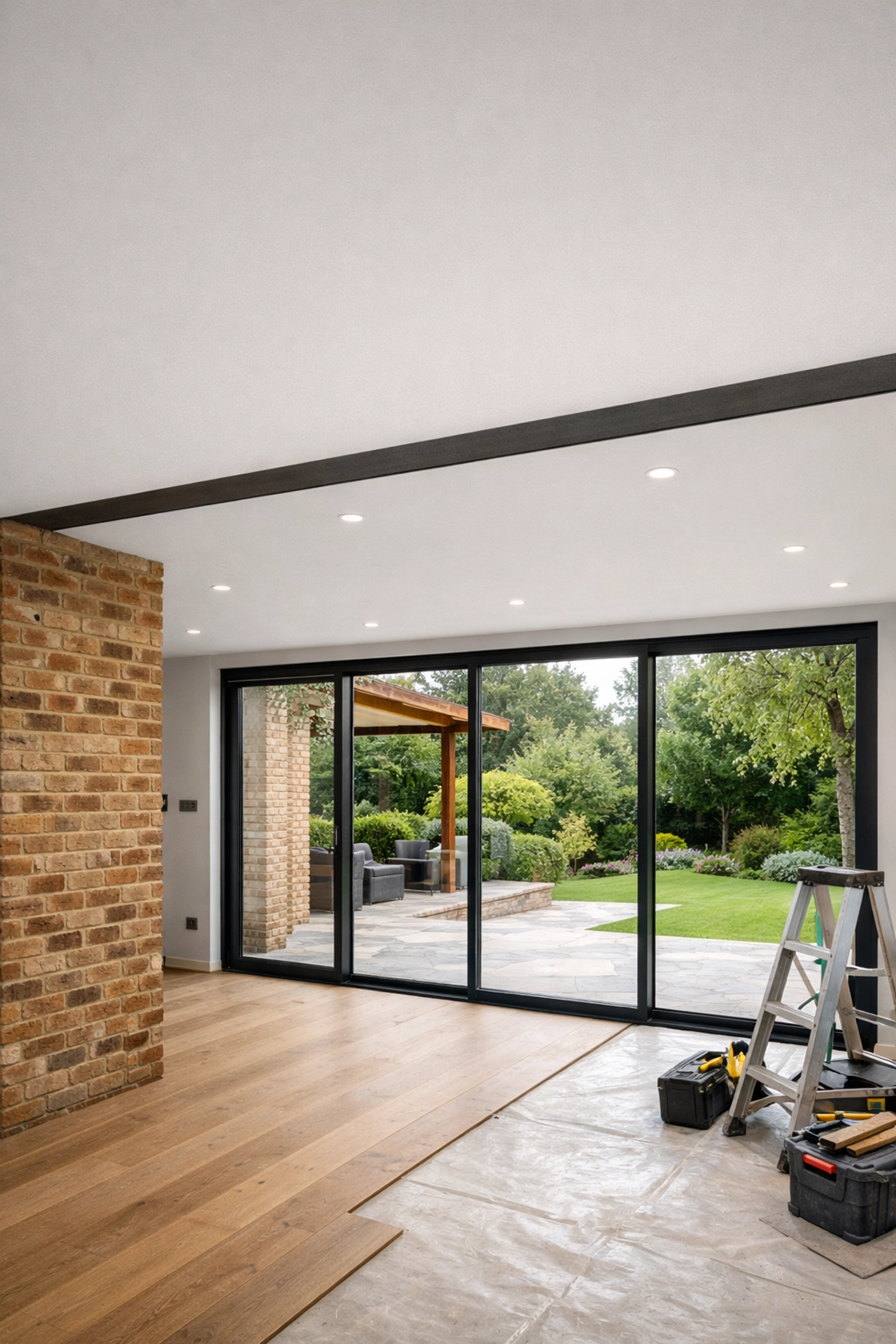
The biggest bottleneck in any HMO conversion is the disconnect between the architect and the structural engineer. The architect wants a massive open-plan kitchen, but the structural engineer says you need a massive steel beam that eats into your ceiling height (and your profits).
We solved this 20 years ago by bringing everything in-house. Our hmo architects work side-by-side with our structural engineers from day one. This means:
Value Engineering: We don't over-specify steel. We find the most cost-effective way to support your extension or loft conversion.
Space Maximization: We know exactly how thin a partition wall can be while still meeting fire and acoustic regulations.
Speed: No more waiting three weeks for a consultant to reply to an email. We iterate in real-time.
When you are calculating your extension budget, this integrated approach often saves our clients between £5,000 and £15,000 in unnecessary construction costs.
The Proven Framework for HMO Success
If you are looking to enter the London or Surrey market, follow this framework to ensure your investment doesn't turn into a liability.
Step 1: The Due Diligence Phase
Before buying, check the Article 4 status of the area. Use our Planning Predictor to get an immediate sense of what is likely to be approved. Do not take the estate agent’s word that "it’s a perfect HMO": they aren't the ones dealing with the council.
Step 2: The Design & Yield Audit
Work with your hmo architect to sketch out the maximum occupancy. Can you squeeze in a sixth bedroom by reconfiguring the stairs? Can a dormer loft conversion turn a three-bed house into a six-bed powerhouse? This is where the profit is made.
Step 3: Licensing and Compliance
Apply for your mandatory or additional licensing early. In 2026, the penalties for unlicensed HMOs are astronomical. Ensure your design accounts for fire doors, thumb-turn locks, and Grade D1 fire alarm systems from the start.
Step 4: Structural Integration
This is where we ensure the building can actually handle the new layout. HMOs often involve moving load-bearing walls to create en-suites. Our in-house structural team ensures these changes are safe, legal, and cost-effective.

Planning for the Future
The HMO market is maturing. The days of "cramming them in" are over. Today’s successful investors in Hertfordshire and Surrey are focused on "Co-Living": high-spec rooms with great communal spaces.
The planning process can be a headache, but it is a manageable one if you have the right team behind you. Understanding planning application fees and local constraints is the first step toward a portfolio that actually works for you.
Whether you are eyeing a terrace in Croydon or a detached property in St Albans, the framework remains the same: identify the demand, navigate the local planning quirks, and design for maximum yield without compromising on safety.
Ready to Start Your HMO Journey?
Converting a property into an HMO is a complex dance between design, law, and engineering. With over two decades of experience, Shorplans Developments is the partner you need to ensure you don't miss a step.
If you are ready to stop guessing and start building, explore our portfolio of successful projects to see how we have transformed properties across London and the Home Counties. Let’s turn your property into a high-performance asset.


