.png)

_edited.png)
Looking For Architects in Croydon or Bexleyheath? Here Are 10 Things You Should Know Before Hiring
- Feb 11
- 5 min read
Hiring the right architect determines whether your project runs smoothly or becomes a costly nightmare. In Croydon and Bexleyheath, where planning regulations shift between boroughs and local character matters, choosing a firm with genuine area expertise makes all the difference.
This guide outlines ten critical factors homeowners and developers should evaluate before signing any contract. Whether planning a loft conversion, rear extension, or new build, these considerations separate competent firms from exceptional ones.
1. Deep Knowledge of Local Planning Authorities
Croydon Council and Bexley Council operate under different planning frameworks. An architect unfamiliar with borough-specific requirements wastes time submitting incomplete applications.
Croydon has particularly strict guidelines around Conservation Areas and Article 4 directions that remove certain permitted development rights. Bexley focuses heavily on heritage considerations, especially near areas like Danson Park and Hall Place. The architect you hire should reference these specifics without consulting Google mid-conversation.
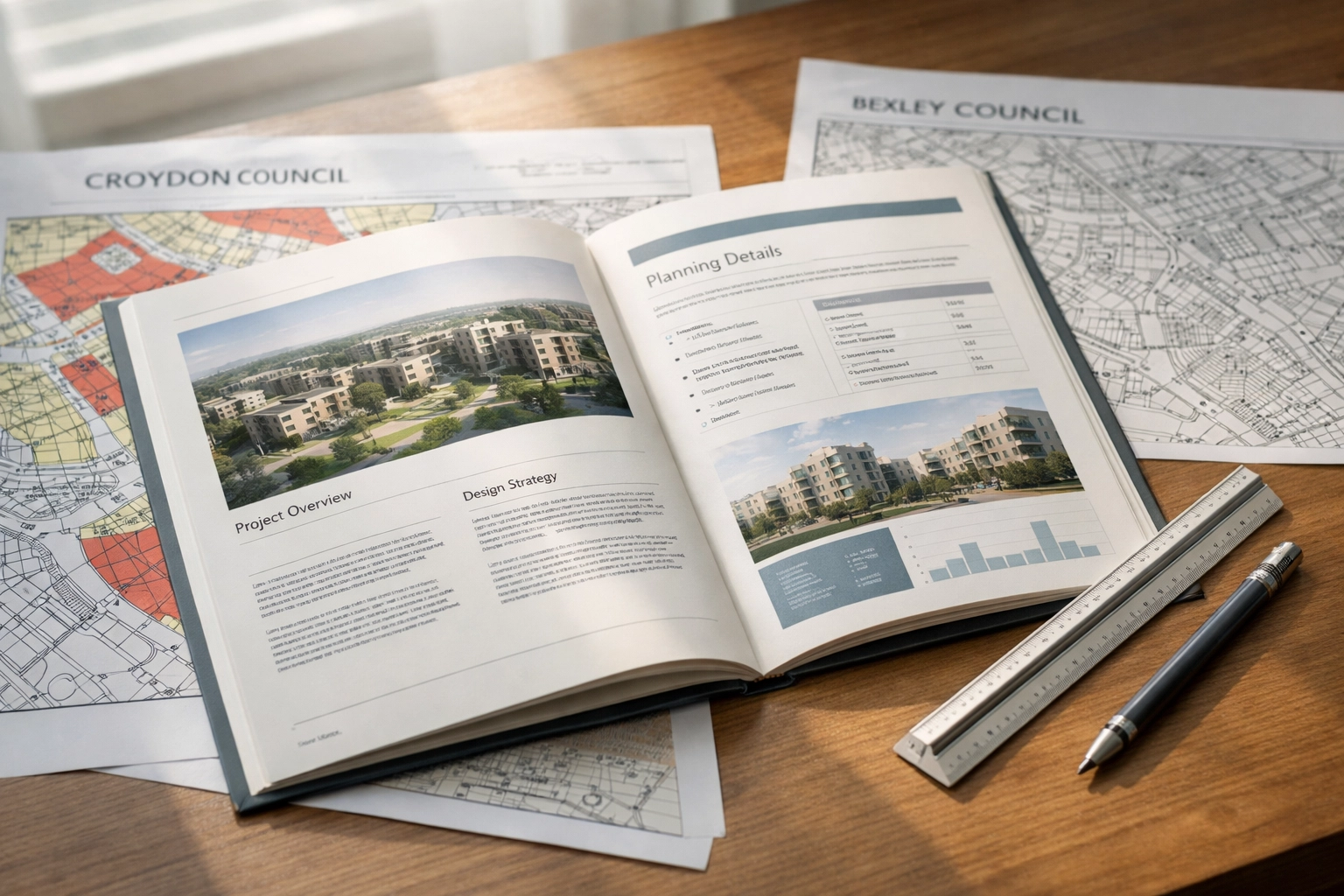
Firms with established relationships with local planning officers navigate objections more effectively. They understand which council officers handle which wards and how each interprets policy nuances.
2. RIBA Registration and Professional Credentials
Professional registration protects you legally and financially. Architects registered with the Architects Registration Board (ARB) must maintain professional indemnity insurance and adhere to strict codes of conduct.
RIBA Chartered Practices undergo additional vetting for quality standards and business practices. This credential indicates the firm operates to nationally recognized benchmarks for client service and project delivery.
Check credentials directly rather than accepting claims at face value. The ARB maintains a public register searchable by name or practice. This verification takes two minutes but prevents fraudulent practitioners from handling your six-figure investment.
3. Portfolio Evidence of Similar Projects
Generic portfolios filled with glossy renders rarely indicate genuine capability. Look for completed projects matching your scope and scale within the last three years.
Planning a two-storey rear extension? The portfolio should show multiple extensions that achieved planning consent and got built. Considering an HMO conversion? Evidence of navigating fire regulations and Building Control approvals matters more than aesthetic imagery.

Pay attention to project locations. Architects who completed ten projects in Croydon understand local building surveyors' interpretation of Building Regulations differently than firms working primarily in Central London or Kent.
4. In-House Structural Engineering Coordination
Most residential projects require structural calculations for Building Control approval. The coordination between architect and structural engineer determines project efficiency.
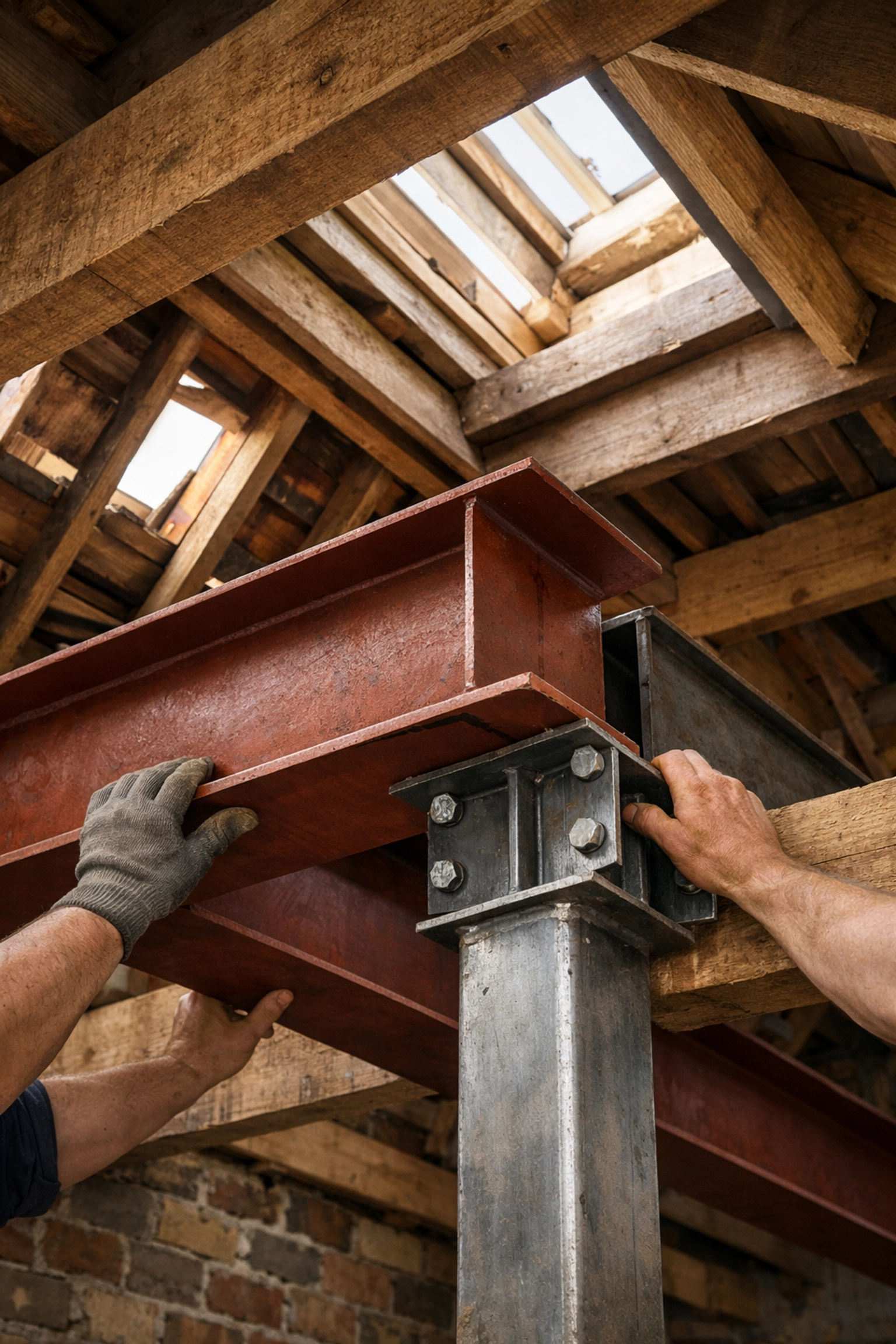
Practices offering in-house structural engineering eliminate the communication delays and finger-pointing that plague projects using separate consultants. When your architect and structural engineer work under one roof, RSJ specifications align with architectural drawings from day one.
At Shorplans Developments, this integrated approach has streamlined hundreds of projects over 20+ years. Homeowners avoid the scenario where structural engineers reject architectural designs mid-project, forcing costly redesigns and timeline extensions.
5. Communication Style and Responsiveness
Professional competence means little if the architect disappears for weeks between emails. Evaluate responsiveness during initial consultations as a preview of future project management.
Do they return calls within 24 hours? Do they explain technical concepts clearly without condescension? Can they translate your vision into actionable design options?
Request a preliminary meeting before committing to fees. Observe whether they ask detailed questions about your lifestyle, budget constraints, and timeline expectations. Architects who listen design better buildings than those who impose signature styles.
6. Transparent Fee Structures and Budget Management
Architectural fees typically range from 8-15% of construction costs for full services, though fixed-fee arrangements increasingly common for standard residential work. The pricing structure matters less than transparency about what it includes.
Does the fee cover planning resubmissions if the council requests amendments? Are Building Control drawings included or charged separately? What happens if you need design changes during construction?
Experienced architects provide detailed fee breakdowns itemizing each project stage from initial surveys through contract administration. This specificity prevents disputes when unexpected costs emerge mid-project.
Shorplans' 20+ years managing local projects means accurate cost forecasting from initial consultations. We understand Croydon and Bexleyheath construction rates, planning fee schedules, and realistic timelines for party wall agreements.
7. Understanding of Local Architectural Character
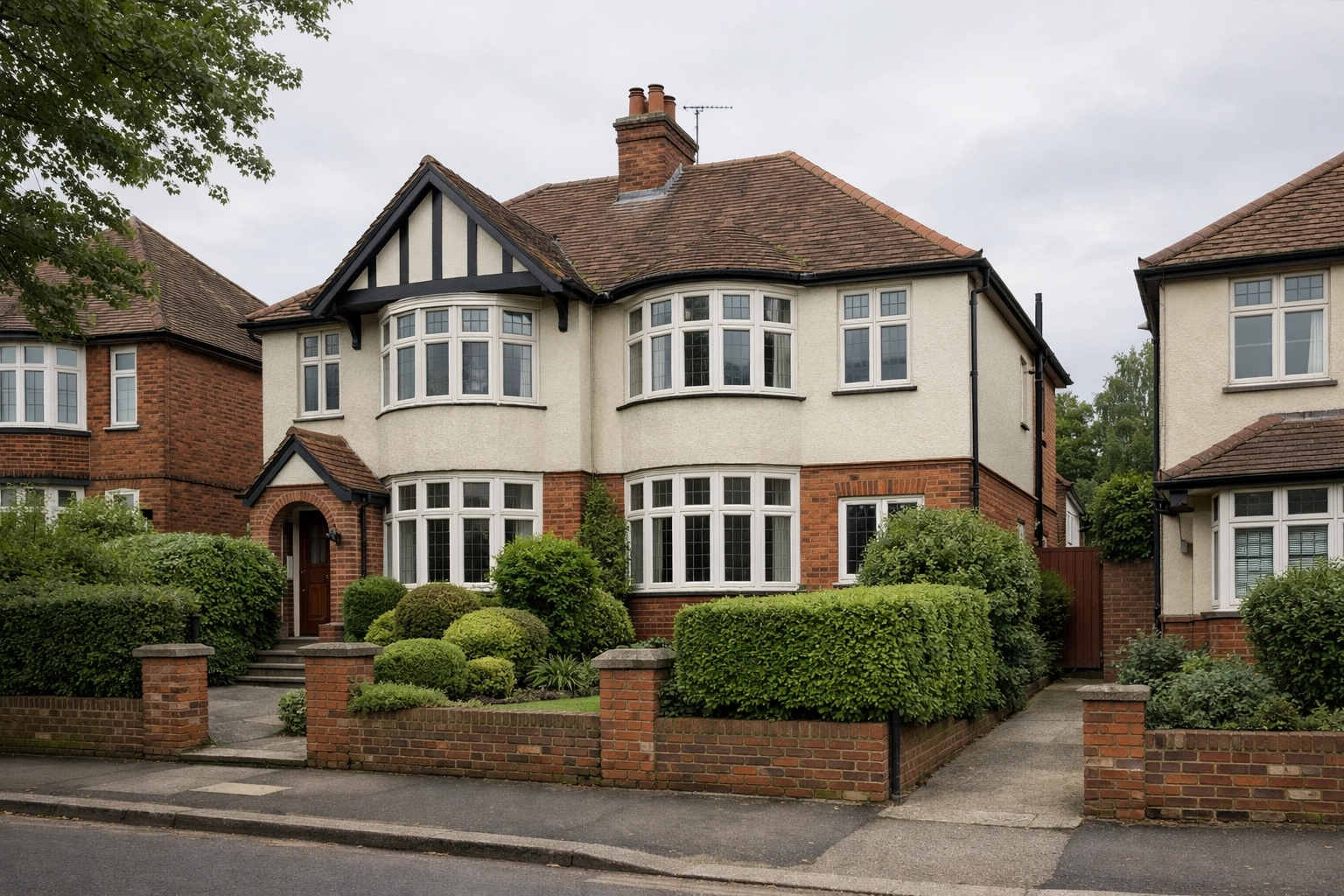
Every area has unwritten design expectations beyond formal planning policy. Croydon's Coulsdon and Purley wards favor traditional pitched roofs and brick detailing. Bexleyheath's 1930s suburbs resist ultra-modern flat-roof extensions.
Architects attuned to neighbourhood context design schemes that gain planning approval faster and maintain property values better. They know when contemporary glass and steel works and when traditional materials prevent planning objections.
Review portfolio projects for contextual sensitivity rather than design awards. A well-designed extension that respects surrounding properties serves homeowners better than an architecturally "bold" scheme that attracts neighbour objections and planning refusals.
8. Client References Beyond the Portfolio
Every architect curates their best projects for portfolio presentation. References from actual clients reveal what portfolio photographs cannot: reliability, problem-solving ability, and conduct when issues arise.
Request contacts for three recent clients whose projects matched your scope. Ask specific questions: Did the project finish on budget? How did the architect handle unexpected problems? Would they hire the same firm again?
The most valuable references often come from clients whose projects encountered difficulties. How architects respond to structural complications, planning delays, or contractor disputes indicates their true professional calibre.
9. Service Flexibility and Tailored Offerings
Not every project requires full architectural services from initial concept through construction completion. Some clients need only planning drawings. Others want contract administration but handle design internally.
Quality practices adapt services to client needs rather than forcing unnecessary packages. This flexibility particularly benefits developers managing multiple projects who need specific deliverables on tight timelines.
Clarify minimum service requirements during initial discussions. Some practices refuse partial services to protect professional liability. Others happily provide discrete packages for experienced clients comfortable managing contractors directly.
10. Established Track Record and Longevity
Architectural practices with 20+ years' operation demonstrate financial stability and sustained competence. They've survived economic downturns, adapted to regulatory changes, and built supplier networks that benefit current clients.
Longevity also indicates reliable professional indemnity insurance coverage. Newly established practices sometimes struggle maintaining adequate insurance levels, leaving clients exposed if latent defects emerge years after project completion.
Shorplans Developments has operated in Croydon and Bexleyheath since before the 2008 financial crisis, the 2012 NPPF reforms, and the 2015 Building Regulations updates. This continuity means understanding how current planning policies evolved and where future changes might head.
Established firms maintain relationships with local contractors, surveyors, and planning consultants. These networks accelerate project delivery and provide contingency options when primary contractors become unavailable.
Making Your Decision
Hiring architects in Croydon or architect Bexleyheath services requires evaluating competence across multiple dimensions simultaneously. Technical skill matters, but so does local knowledge, communication ability, and proven delivery.
Schedule consultations with at least three practices before committing. Compare not just fees but service scope, timeline estimates, and how each firm approaches your specific project challenges.
The cheapest quote rarely delivers the best value. The most expensive practice doesn't guarantee superior outcomes. Focus instead on demonstrated expertise in your project type, transparent communication, and evidence of successful delivery in your specific borough.
Ready to discuss your project with a practice offering 20+ years of Croydon and Bexleyheath experience? Shorplans Developments combines architectural design with in-house structural engineering for seamless project coordination from concept through completion.

